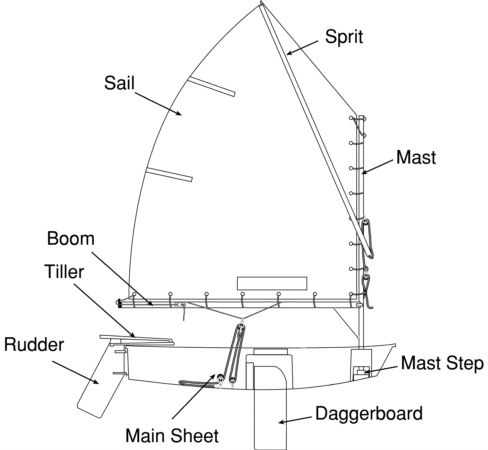
If you’re buying a junior sailing dinghy for the Cam, the two main contenders are the Optimist and Topper—each suited to different ages, weights, and ambitions.
The first place to consider buying is from within the club. There is regular movement of dinghies as young sailors advance to larger or newer boats. Alot of dinghies stay within the club and pass from family to family mostly with a known history of the boat. Other local clubs may also have their boats for sale advertised on their notice boards or websites. Various web based sites also advertise dinghies for sale such as Apollo Duck.
 
🚤 Best Junior Dinghies to Consider
 
🟦 1. Optimist (Ages ~7–12)
Best for: absolute beginners, lighter sailors, early racing  
Price range (used): ~£250–£2,000   
 
Why choose it?
– Extremely stable and forgiving  
– Global junior racing class  
– Ideal for learning fundamentals  
– Very light and easy to handle  
 
Specs
– Length: 2.28 m  
– Weight: ~60 kg  
– Sail area: 5.7 m²   
 
 
🟧 2. Topper (Ages ~10–16)
Best for: progressing sailors, club racing, more performance  
Price range (used): ~£300–£750+   
 
Why choose it?
– Faster and more responsive than an Optimist  
– Huge UK racing scene (RYA pathway class)  
– Two sail sizes (4.2 & 5.3) for growing sailors  
– Durable and simple to rig  
 
Specs
– Length: 2.43 m  
– Weight: ~70 kg  
– Sail area: 4.2–5.3 m²   


If you’re buying an Optimist dinghy—especially around the UK market—you’ll want to focus on class legality, hull condition, rig quality, and whether the boat matches your sailor’s goals (training vs. racing). Below is a clear practical checklist.
 
🧭 Key Things to Look Out For When Buying an Optimist Dinghy
 
Whether you’re buying your first training boat or a race-ready hull, these are the essentials every buyer should check.
 
🛶 1. Class Legality & Certification
If your sailor might race, this is a must.
 
– Look for the IODA builder’s plaque with a unique serial number.  
– Check the boat against the IODA registry (missing plaques can mean the boat is not class‑legal).  
– Avoid “Opti‑style” or “Optimist‑inspired” boats—they may be cheaper but not allowed in racing and often handle poorly.  
– Confirm the hull meets class specs:  
  – Length: 2.30–2.36 m  
  – Beam: ~1.13–1.15 m  
  – Hull weight: 35–40 kg  
  – Sail area: ~3.3–3.5 m²  
 
 
🧱 2. Hull Condition (Most Important for Used Boats)
 
Inspect carefully for:
 
– Hairline cracks along the chine and transom  
– Stress fractures around the mast step and centreboard case  
– Soft spots in the deck (press firmly with your thumb)  
– Signs of water ingress in foam‑core hulls (can lead to delamination)  
– Repairs—good repairs are fine, but multiple patches may indicate heavy use  
  
 
Tip: A hull that feels “spongy” is a red flag.
 
⛵ 3. Rig, Spars & Foils
 
Check the condition of:
 
– Mast, boom, and sprit (look for bends or corrosion)  
– Sail(s): racing sails lose shape after a season  
– Daggerboard and rudder: ensure they’re straight and not waterlogged  
– Tiller and extension: cracks or flexing indicate replacement needed  
 
For racing sailors, branded high‑performance rigs (e.g., Winner, Far East) matter more.  
 
 
🎒 4. Included Equipment & Extras
 
A well‑equipped Optimist should ideally include:
 
– Launching trolley  
– Top cover & bottom cover  
– Bailers, painter, airbags  
– Spare sail or spars (bonus)  
– Measurement certificate (if racing)  
 
Missing accessories can add £150–£400 to your total cost.
 
🎯 5. Suitability for Your Sailor
 
Ask yourself:
 
– Training or racing?  
  – Training boats can be older and heavier.  
  – Racing boats should be stiffer, lighter, and from top builders (Winner, Far East, McLaughlin).  
– Age & size of sailor?  
  – Younger sailors benefit from lighter rigs and smaller sails.  
– Freshwater vs. saltwater use?  
  – Saltwater boats need closer inspection for corrosion.
 
💷 6. Price Expectations (UK Market)
 
– Basic training Optimist: £250–£600  
– Good condition club boat: £600–£1,200  
– Race‑ready boat (Winner/Far East): £1,500–£3,500+  
  
If you’re buying a Topper dinghy—new or used—the key is to check the hull, mast step, transom plate, and airtightness, because these are the areas that most affect safety, performance, and resale value. Below is a clear, practical checklist based on expert guidance and what’s typical in the UK second‑hand market.
 
🛶 What to Look Out For When Buying a Topper Dinghy
 
Here are the most important inspection points, backed by guidance from the International Topper Class Association and used‑boat experts.  
Sources: 
 
🔍 1. Hull Condition (Most Important)
– Check for distortion  
  – Toppers should be stored deck‑down or on their gunwale.  
  – A distorted hull affects speed and handling.
– Look for deep scratches or gouges  
  – Minor scratches are normal and fixable; deep ones may need professional repair.
– Check for fading or “chalky” decks  
  – Cosmetic only, but heavy fading may indicate long sun exposure.
– Inspect for bruises on purple/dark decks  
  – White marks can appear but often disappear with careful heat treatment.
 
💨 2. Airtightness (Critical for Safety)
– Remove the bung after sailing—a healthy hull should “hiss” as air escapes.  
– If it doesn’t hiss, it may have leaks.  
– Always check the bung threads and seal.
 
⛵ 3. Mast Foot Cup
– Look inside the mast step:  
  – If the cup is worn or missing, the mast can punch through the deck.  
  – A new mast foot cup (post‑2019 design) is available and retrofittable.
 
🔩 4. Transom Plate
– Ensure the captive nut inside hasn’t detached.  
– If loose, the rudder fittings can’t be tightened and repairs are awkward.
 
🪢 5. Rigging & Controls
– Older boats may have outdated systems.  
– Check:
  – Kicker/vang
  – Downhaul (Cunningham)
  – Outhaul
– Upgrading to modern 6:1 systems is easy and improves handling.
 
🪁 6. Sail Condition
– Look for:
  – Baggy cloth  
  – Tears or patches  
  – Frayed bolt rope  
– A new sail transforms performance, so a tired sail isn’t a deal‑breaker—just a negotiation point.
 
🛼 7. Foils (Daggerboard & Rudder)
– Check for:
  – Chips  
  – Warping  
  – Swollen edges  
– Minor damage is normal; major damage affects control.
 
🛒 8. What Should Be Included?
A good second‑hand Topper usually comes with:
– Sail (5.3 or 4.2)  
– Spars  
– Foils  
– Tiller + extension  
– Launching trolley  
– Cover  
– Bung + bailer  
 
Missing items add cost—use this to negotiate.
 

Optimist Dinghy Maintenance Tips

Maintaining an Optimist dinghy is essential for optimal performance and longevity. Here are some key tips to keep your dinghy in top condition:
  • Regular MaintenancePerform regular maintenance and descaling, ideally before and after regattas, to ensure your dinghy is shiny and ready to perform. 
  • CleaningRemove sticker residues with nail polish remover or similar and wash the exterior/interior regularly. 

     
  • Sail CareRemove sails and rinse them with fresh water to help prevent rodent damage. Check for any damage around the batten pockets and headboard/luff rope area. 

     
  • SparsRemove spars, wash, dry down, and dry store if possible to prevent  corrosion. 

     
  • StorageStore your dinghy under a cover to protect it from water, ice, and frost. Ensure the carpet or protection used on the trolley cradle is dry before storing. 


    Optimist Dinghy Repair Tips

    When it comes to repairing your Optimist Dinghy, here are some tips to keep in mind:
     
    • Basic RepairsFor minor hull, foils, and sails, you can often handle the repairs yourself. Use epoxy for nicks and dings,  and polyester resin and fiberglass cloth for more severe damage. 

       
    • Hull MaintenanceScratches can be filled with gelcoat, and nicks should be repaired immediately to prevent water ingress.  Ensure all nuts are securely tightened and check the universal joint for tears. 

       
    • Sail CareWash sails with fresh water after sailing, especially in the sea. Store in sail bag and ensure batten ends have caps. 

       
    • Rigging and TuningFamiliarize yourself with the major parts of your Optimist and follow the instructions  in the owner’s manual for rigging and tuning. 

       
    • Professional HelpFor more complex repairs, seek professional help. This can include fiberglass work for structural damage  and gelcoat for small nicks and scratches. 


      By following these tips, you can maintain your Optimist Dinghy and ensure it is well-maintained and ready for sailing.


Topper Dinghy Maintenance Tips 


By following these maintenance tips, you can keep your Topper dinghy in top condition and enjoy worry-free boating experience. 

To maintain your Topper sailing dinghy, follow these tips:
  • Store with the deck facing down to avoid hull distortion.
  • Keep sails rolled on plastic drainpipe to prevent water ingress.
  • Remove the bung when not sailing to prevent hull distortion.
  • Regularly inspect and replace worn cordage, cleats, and blocks.
  • Tighten all screws, especially on the transom plate.
  • Clean the hull with bathroom cleaner and plastic scouring pad. 

Topper Dinghy Repair Tips

Repairing a Topper dinghy involves addressing leaks, restoring the hull surface, and maintaining fittings using sealants,  careful cleaning, and minor structural adjustments.

Identifying and Fixing Leaks

Leaks are common in older Toppers, often occurring at the hull-deck joint, daggerboard case, bailer, transom, or mast cup area. To locate leaks, fill the hull with soapy water and gently pressurize it using a dinghy pump or even lung pressure, then watch for escaping air bubbles. 

  • Bailer and hull side leaks: Remove the bailer and replace the gasket or apply a sealant like TIKALFLEX CONTACT  POLYMER SEALANT. 
  • Hull-deck joint:  Remove old gaskets, clean and degrease the area, then reseal with TIKALFLEX while applying slight negative pressure to ensure a tight bond. 
  • Mast cup: If leaks persist, inspect the mast cup assembly; replacement may be necessary. 
  • Transom screws: Ensure screws are tightened progressively; if captive nuts spin, the inner plate may need replacement. 

Hull Surface Restoration

Polypropylene hulls can fade or appear worn over time. Avoid sanding the top surface, as it has a non-slip coating. Instead: 

  • Wash the hull thoroughly.
  • Use wire wool, white spirit, or a cream cleaner to remove dirt and oxidation. 
  • Carefully apply heat with a hairdryer or warm air gun to rejuvenate color, taking care not to overheat and melt the plastic. 
  • For minor gouges on the bottom, fill with a P-Tex candle and smooth with fine wet sandpaper. 

Maintenance of Fittings

  • Check the daggerboard case, rudder fittings, and traveller fairleads for wear or leaks. 
  • Replace worn screws, gaskets, or sealant as needed.
  • Consider adding a small bridle from the mast step for a painter attachment to prevent stress on the foredeck. 

Preventative Tips

  • Keep the hull dry and clean when not in use.
  • Inspect and reseal fastenings periodically.
  • Avoid excessive UV exposure; store under cover or use a protective cover.
  • Ensure proper tension when transporting on a trailer to prevent hull distortion. 

By following these steps, a Topper dinghy can be restored to a watertight, visually appealing,  and functional condition, extending its lifespan and performance on the water.